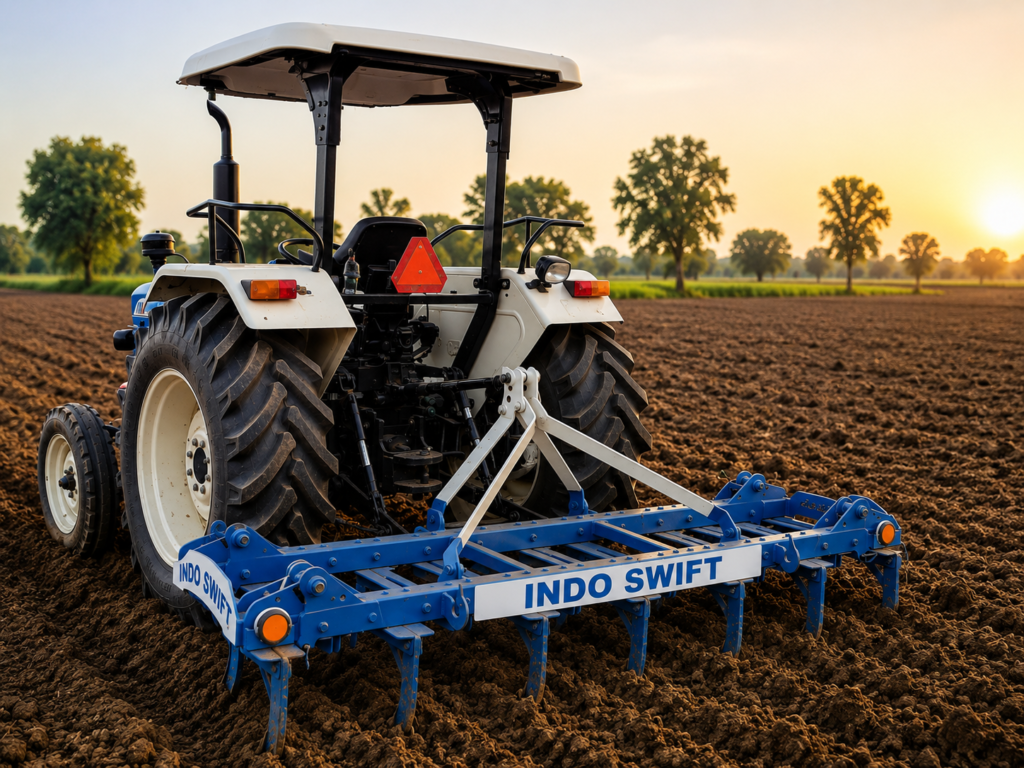
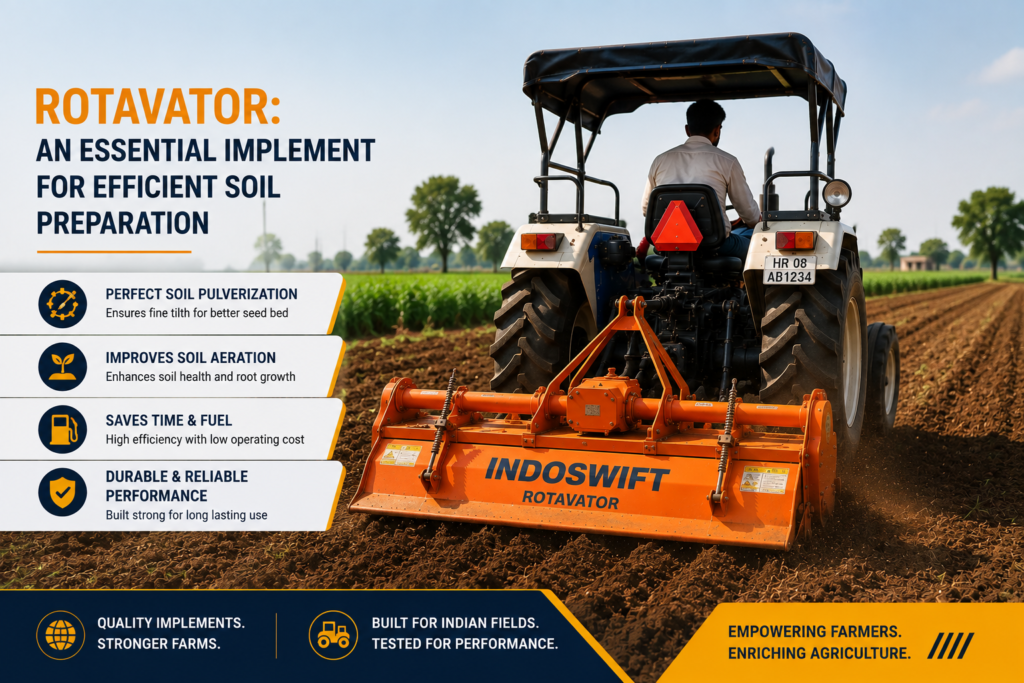
Picture this: a farmer standing at the edge of a hard, sun-baked field, staring down weeks of backbreaking work with a plough just to get the soil ready for sowing. Now picture the same field, turned into soft, crumbly, perfectly aerated soil in a single pass — in a fraction of the time. That’s the magic of the rotavator, one of the most game-changing implements in modern farming.
What Exactly Is a Rotavator?
A rotavator (short for “rotary cultivator”) is a tractor-mounted implement fitted with rotating blades that till, break, and mix the soil in one smooth motion. Unlike traditional ploughs that simply cut and turn the soil, a rotavator pulverizes it — breaking down clods, mixing in crop residue, and leaving behind a fine, even seedbed ready for planting.
Think of it as the difference between chopping vegetables with a knife versus running them through a food processor. Both get the job done, but one does it faster, finer, and with a lot less elbow grease.
Why Farmers Love It
1. One Pass Does It All Where traditional tillage might need two or three separate operations — ploughing, harrowing, leveling — a rotavator often achieves all of this in a single pass. That’s less fuel, less time, and less wear on both machine and farmer.
2. Better Soil, Better Roots The fine, well-aerated soil left behind by a rotavator gives young roots room to breathe and spread. Better soil structure means better water retention, better nutrient absorption, and ultimately, healthier crops.
3. Handles Crop Residue Like a Pro Leftover stubble and plant debris from the previous harvest? A rotavator chops it up and mixes it right into the soil, turning waste into organic matter instead of leaving it to rot on the surface or get burned off.
4. Saves Precious Time During tight sowing windows — especially between two cropping seasons — every day matters. A rotavator can prepare a field in hours that would otherwise take days with conventional tools.